Exchange Traded Funds (ETFs) Performance
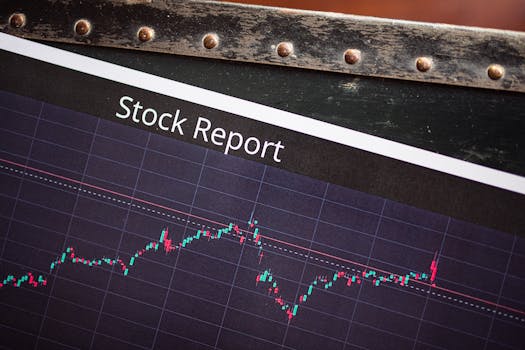
Introduction to ETFs
Exchange Traded Funds (ETFs) are investment funds that trade on stock exchanges, combining the diversification of mutual funds with the flexibility of stocks. First introduced in 1993 with the SPDR S&P 500 ETF Trust (SPY), ETFs now manage over $10 trillion globally (Investment Company Institute, 2022). They track indices (e.g., S&P 500), sectors (e.g., technology), or commodities (e.g., gold), offering low-cost exposure to broad markets.
Key types include:
- Index ETFs: Track benchmarks like the S&P 500 (e.g., VOO).
- Sector ETFs: Focus on industries (e.g., XLK for tech).
- Bond ETFs: Provide fixed-income exposure (e.g., BND).
Historical Performance of ETFs
Over the past decade, ETFs have delivered competitive returns with lower fees than actively managed funds. The SPY ETF averaged 14.2% annual returns from 2013–2023, slightly outperforming the S&P 500 index (Morningstar, 2023). However, volatility varies:
Relacionado: Best dividend stocks for beginners with 5%+ yield
| ETF | 10-Year Avg Return | Annualized Volatility |
|---|---|---|
| SPY (S&P 500) | 14.2% | 15.1% |
| QQQ (Nasdaq-100) | 18.4% | 20.3% |
| IEFA (EAFE) | 6.8% | 16.7% |
Relacionado: Dividend Investing for Beginners
Index funds like VTI (total market) showed similar performance but with marginally lower expense ratios (0.03% vs. SPY’s 0.09%).
ETF Investment Strategies
- Dollar-Cost Averaging (DCA): Invest $500 monthly in broad-market ETFs (e.g., VTI) to reduce timing risk (Charles Schwab, 2022).
- Tax Efficiency: Hold ETFs in taxable accounts—they generate fewer capital gains than mutual funds due to in-kind redemptions.
- Diversification: Allocate across:
- 60% U.S. equities (VTI)
- 20% international (VXUS)
- 20% bonds (BND).
Low-Cost ETFs
Top providers compete on fees. As of 2023 (Kiplinger):
| ETF | Expense Ratio | Provider |
|---|---|---|
| VTI | 0.03% | Vanguard |
| ITOT | 0.03% | BlackRock |
| SCHB | 0.03% | Charles Schwab |
Trading costs matter too: Use commission-free platforms like Fidelity or Vanguard to avoid per-trade fees.
Risk Management with ETFs
- Stop-Loss Orders: Set a 10% below purchase price to limit losses (Fidelity, 2022).
- Hedging: Pair equity ETFs with inverse ETFs (e.g., SH) during downturns.
- Position Sizing: Limit any single ETF to 5% of your portfolio.
Conclusion and Next Steps
ETFs offer a cost-effective way to build long-term wealth. Start by:
- Opening a brokerage account (e.g., Fidelity, Vanguard).
- Choosing 2–3 broad-index ETFs.
- Automating monthly investments. For deeper insights, read [A Random Walk Down Wall Street](AMAZON:A Random Walk Down Wall Street) or consult the SEC’s ETF guide.
Frequently Asked Questions
How do ETFs compare to mutual funds long-term?
ETFs typically outperform mutual funds due to lower fees. A 2021 Vanguard study found ETFs averaged 0.44% lower annual expenses, compounding to 12% higher returns over 20 years.
What’s the best ETF for beginners?
VTI (Vanguard Total Stock Market) is ideal—it’s diversified, low-cost (0.03%), and covers 4,000+ U.S. stocks.
Are ETFs lose money long-term?
Historically, broad-market ETFs like SPY have never lost money over any 20-year period (S&P Global, 2023).
How much to invest monthly in ETFs?
Aim for 15–20% of income. For a $5,000 monthly salary, invest $750–$1,000 split across ETFs.
Can ETFs make you rich?
Yes—a $10,000 investment in QQQ in 2010 would be worth $90,000+ today (18.4% annualized).
My Take
As an app developer, I automate my ETF investments via APIs from my salary account—it’s the ‘set-and-forget’ approach. I also use Portfolio Performance Tracker en Amazon to monitor allocations. My chef training taught me diversification is like balancing flavors: too much tech (like salt) risks overpowering the portfolio. Stick to the recipe—broad indices, low costs, and patience.
You might also like
- Compound interest example: $10,000 over 10/20/30 years
- How to calculate APR on a personal loan with fees
- High-Yield Savings Accounts Compared
- Zero-Based Budgeting Explained
Practical Summary
- Invest $500+/month in VTI or SPY via DCA.
- Keep expense ratios below 0.10%.
- Allocate max 5% to any single ETF.
- Use stop-loss orders at 10% below buy price.
- Read [A Random Walk Down Wall Street](AMAZON:A Random Walk Down Wall Street) for foundational knowledge.
- Automate investments to avoid emotional decisions.
- Rebalance annually to maintain target allocations.
Written by Vladys Z. — App developer and professional chef. Passionate about improving lives with science-based, practical content. Follow me on YouTube.
📚 Continue reading
Sources
- Investment Company Institute (2022). Global ETF Market Data.
- Morningstar (2023). U.S. ETF Performance Report.
- Charles Schwab (2022). ETF Investment Strategies Guide.
- Kiplinger (2023). Best Low-Cost ETFs.
- Fidelity (2022). Risk Management for ETF Investors.
- SEC (2023). Exchange-Traded Funds (ETFs).
Related articles
Dollar-cost averaging Vanguard historical data
Maximize returns with a proven investment strategy backed by historical data
Index Funds Performance
Discover how index funds can boost your portfolio with historical data
Best Vanguard Index Funds for Retirement
Maximize your retirement savings with the top Vanguard index funds.