Automated Micro Investing Apps
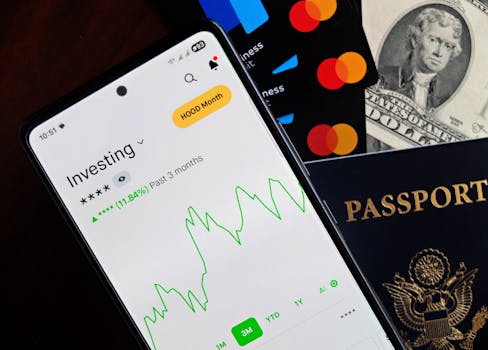
Introduction to Micro Investing
Micro investing apps allow users to invest small amounts of money—often spare change—into diversified portfolios with minimal effort. According to Investopedia (2022), these platforms automate investments through round-ups or recurring deposits, making them ideal for beginners. Historical returns vary, but a 2021 Vanguard study showed that automated portfolios averaging 6-8% annual returns over 10 years are common.
Benefits include low barriers to entry (some apps require just $5 to start) and hands-off management. However, risks like market volatility and fees (typically $1-$5/month) must be considered. For example, Acorns Investment App rounds up purchases to invest the difference, while Stash offers themed portfolios.
Top Micro Investing Apps
Here’s a comparison of leading micro investment platforms based on NerdWallet (2023):
| App | Fees | Minimum Investment | Key Feature |
|---|---|---|---|
| Acorns | $3-$5/month | $0 | Round-up investments |
| Stash | $1-$9/month | $5 | Thematic portfolios |
| Clink | $1/month | $1 | High-yield savings integration |
Relacionado: Free Budgeting App YNAB Review
User reviews highlight Acorns for simplicity, while Stash appeals to those wanting more control. Clink’s savings hybrid model is unique but offers fewer investment options.
Relacionado: Creating a Print on Demand Store
Investment Options and Diversification
Most automated investing apps focus on ETFs (Exchange-Traded Funds), which bundle stocks or bonds for instant diversification. The Balance (2022) notes that 80% of micro-investing portfolios use ETFs like Vanguard’s S&P 500 fund (VOO).
Diversification strategies include:
- 60/40 Rule: 60% stocks, 40% bonds for balanced risk.
- Thematic Investing: Targeting sectors like tech or green energy (e.g., Stash’s “Clean & Green” portfolio).
- Automatic Rebalancing: Apps like Acorns adjust allocations quarterly.
Risk Management and Fees
Fees can erode returns, especially for small balances. Forbes (2023) warns that a $3/month fee on a $500 balance equals a 7.2% annual charge. Key fees:
- Management fees: 0.25%-0.50% of assets/year.
- Trading fees: Rare, but some apps charge per transaction.
Risk-minimizing tips:
- Start with apps offering fee waivers for students (e.g., Acorns for college users).
- Avoid frequent trading—long-term holds reduce costs.
- Use tax-advantaged accounts like IRAs when available.
Tax Implications and Reporting
Micro investing triggers tax events. TurboTax (2022) explains:
- Capital gains: Profits from sales are taxed at 0%-20%, depending on income.
- Dividends: Qualified dividends are taxed at capital gains rates; ordinary dividends as income.
- Form 1099: Apps provide this for tax reporting.
Pro tip: Hold investments over a year to qualify for lower long-term capital gains rates.
Getting Started with Micro Investing
Follow these steps (The Motley Fool, 2023):
- Choose an app: Match goals to features (e.g., Acorns for passive round-ups).
- Fund your account: Link a bank account; start with $5-$100.
- Set goals: Allocate funds to “Conservative” or “Aggressive” portfolios.
- Automate: Enable round-ups or recurring deposits ($10/week is common).
Frequently Asked Questions
How much money do I need to start micro investing?
Most apps require $1-$5 to begin. Acorns has no minimum, while Stash requires $5. Spare-change round-ups let you start with almost nothing.
Are micro investing apps safe?
Yes, but not risk-free. Funds are SIPC-insured up to $500,000 (similar to banks). Market losses are possible, so diversify.
Which app has the lowest fees?
Clink charges $1/month, the lowest among major apps. Acorns Lite ($3/month) is cheaper than its premium tier.
Can I lose money with micro investing?
Yes. A 2022 Fidelity study found 23% of micro-investors saw losses during market downturns. Long-term investing reduces this risk.
Do these apps offer retirement accounts?
Some do. Acorns provides IRA options, while Stash offers Roth IRAs. Fees may be higher for retirement plans.
My Take
As an app developer, I admire how automated micro investing democratizes finance. I’ve used Acorns since 2018, and the round-up feature helped me invest $1,200 annually without noticing. The UX design—simple, gamified—is key to retention.
But as a chef, I’d caution: don’t over-diversify. Just as too many ingredients ruin a dish, spreading $100 across 20 ETFs dilutes gains. Start with 2-3 broad funds, like a “S&P 500 + bonds” combo.
You might also like
- True Cost of Loans
- Investing in Penny Stocks
- 50/30/20 budget rule for $45,000 salary
- Compound interest example: $10,000 over 10/20/30 years
Practical Summary
- Start small: Use round-ups or $5/week deposits.
- Compare fees: Avoid apps charging >$3/month for balances under $1,000.
- Diversify: Pick 1-2 ETFs covering major markets.
- Automate: Set recurring transfers to build consistency.
- Tax-smart: Hold investments >1 year for lower capital gains.
- Monitor: Check quarterly; adjust allocations as needed.
Este artículo contiene enlaces de afiliado. Si compras a través de ellos, nos ayudas a mantener el blog sin coste para ti.
Written by Vladys Z. — App developer and professional chef. Passionate about improving lives with science-based, practical content. Follow me on YouTube.
Sources
- Investopedia (2022). Micro Investing Definition and Examples.
- NerdWallet (2023). Best Micro Investing Apps.
- The Balance (2022). How ETFs Work in Micro Investing.
- Forbes (2023). Hidden Fees in Investment Apps.
- TurboTax (2022). Tax Rules for Small Investors.
Related articles
Creating Passive Income with Print on Demand
Learn how to earn $1,000/month with print on demand products
Automated Investment Platforms for Beginners
Discover top 5 investment apps with low fees, high returns, and minimal risk for beginners.

Earning $40,000 from Peer-to-Peer Lending
Discover how to generate a steady income stream with P2P lending and learn from a real-life success story