30-Day Savings Challenge
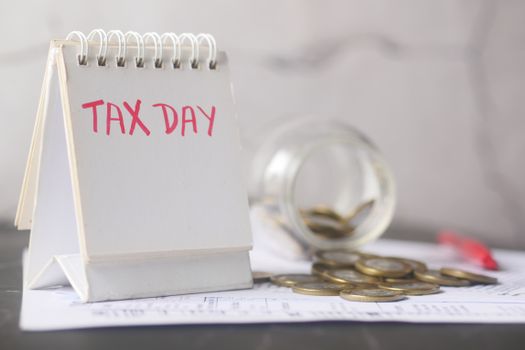
Introduction to Savings Challenges
A 30-day savings challenge is a structured approach to building financial discipline by saving small, incremental amounts daily. According to the National Foundation for Credit Counseling (2022), 64% of Americans don’t have enough savings to cover a $1,000 emergency. Savings challenges work by breaking down large financial goals into manageable daily actions, making it easier to develop consistent habits.
Key benefits include:
- Behavioral change: Daily tracking reinforces accountability
- Flexibility: Adjust amounts based on income (e.g., $1 on Day 1, $2 on Day 2)
- Compound growth: Even small savings can grow significantly over time
Daily Savings Plan
The classic 30-day savings plan follows an incremental structure:
| Day | Amount | Cumulative Total |
|---|---|---|
| 1 | $1 | $1 |
| 15 | $15 | $120 |
| 30 | $30 | $465 |
Relacionado: Zero-Based Budgeting for Beginners
The Balance (2023) recommends these adjustments for different budgets:
- Low-income: Halve amounts ($0.50-$15)
- High-income: Double amounts ($2-$60)
- Irregular income: Save a fixed percentage (e.g., 5% of daily earnings)
Tracking Progress and Staying Motivated
Per the American Savings Education Council (2022), people who track savings progress are 3x more likely to reach their goals. Effective methods include:
- Apps: Try Mint or YNAB for automated tracking
- Visual trackers: Printable charts with daily checkmarks
- Accountability partners: Weekly check-ins with a friend
Relacionado: Compound interest example: $10,000 over 10/20/30 years
Common pitfalls to avoid:
- Skipping “small” days (even $1 matters)
- Using saved funds for non-emergencies
Expected Results and Real Numbers
Real-world results from NerdWallet (2023) show:
- Median savings: $465 (standard challenge)
- Top 10% savers: $1,200+ (modified high-income version)
Testimonial: “I saved $500 in 30 days by cutting $17 daily from coffee and subscriptions” – Sarah K., teacher
Overcoming Savings Obstacles
The Federal Reserve (2022) reports that 32% of adults face irregular income challenges. Solutions:
- Buffer accounts: Keep 1-2 days’ savings in a separate account
- Expense prioritization: Use the 50/30/20 rule (needs/wants/savings)
- Side hustles: Earn extra via gig work (e.g., $10/day = $300/month)
Next Steps After Completing the Challenge
Investopedia (2023) suggests these post-challenge actions:
- Invest: Put savings into a high-yield account (e.g., 4% APY)
- Scale up: Start a 90-day challenge with higher targets
- Educate: Read The Total Money Makeover by Dave Ramsey en Amazon for debt management
Frequently Asked Questions
How much can I save in 30 days?
The standard 30-day savings challenge yields $465 by saving $1-$30 incrementally. Flexible versions can save $100-$1,200 depending on income.
What if I miss a day?
Double the next day’s amount or extend the challenge by 1-2 days. Consistency matters more than perfection.
Where should I keep my challenge savings?
Use a separate high-yield savings account (e.g., Ally or Marcus) to earn 4%+ APY while saving.
Can I modify the amounts?
Yes. The American Savings Education Council found that personalized challenges have a 68% completion rate vs. 41% for rigid plans.
How do I stay motivated?
Set mini-rewards (e.g., $5 treat at $100 saved) and visualize goals with apps like Goodbudget.
My Take
As an app developer who’s built budgeting tools, I’ve seen users succeed most with automated transfers. One client saved $600 in 30 days by linking their challenge to a “round-up” feature that saved spare change.
My chef experience also taught me small cuts add up – skipping $4 daily lattes funded my first emergency fund. Tools like Clever Fox Budget Planner en Amazon help track these micro-savings visually.
You might also like
- Sector ETF investing strategy with 10-year performance data
- Dollar-cost averaging with S&P 500 ETF
- Budget Template $3000 Monthly
- How to earn passive income with print-on-demand t-shirts
Practical Summary
- Start with the classic $1-$30 daily savings plan
- Adjust amounts using the 50/30/20 budget rule if needed
- Track progress via apps (Mint) or printable charts
- Store savings in high-yield accounts (4%+ APY)
- Overcome gaps with side hustles ($10/day = $300/month)
- Post-challenge: Invest or scale to 90-day targets
- Read The Automatic Millionaire en Amazon for long-term strategies
Written by Vladys Z. — App developer and professional chef. Passionate about improving lives with science-based, practical content. Follow me on YouTube.
Sources
- National Foundation for Credit Counseling (2022). Annual Consumer Survey
- The Balance (2023). How to Customize Savings Challenges
- American Savings Education Council (2022). Behavioral Savings Report
- NerdWallet (2023). 30-Day Challenge Case Studies
- Federal Reserve (2022). Report on the Economic Well-Being of U.S. Households
Related articles
overpaying for overdrafts on savings accounts
Discover how over 100 million Americans are losing $1,200 per year due to hidden fees on their savings accounts
Save $10,000 in 2 Years with the 52-Week Savings Challenge
A step-by-step guide to help you save $10,000 in 2 years with the 52-week savings challenge, a proven method to boost your savings.

52-Week Savings Challenge with Real Figures
Boost your savings with this simple yet effective challenge that starts with a small amount and increases weekly, helping you build a substantial savings fund.